
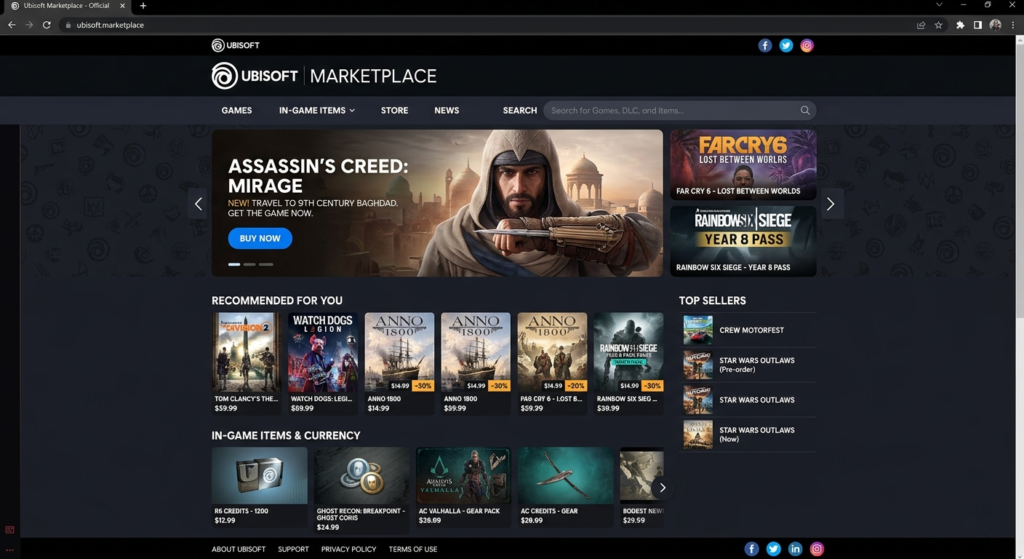
The Ubisoft Marketplace is a digital trading platform that Ubisoft developed to give players greater control over certain in-game digital assets. Ubisoft made it widely known through Ubisoft Quartz, a blockchain-based initiative that introduced unique digital collectibles called Digits. Unlike traditional game items that stay permanently tied to a player’s account, these digital assets offer verifiable ownership and allow players to trade them under specific conditions. The ubisoft marketplace shows Ubisoft’s effort to explore the future of digital ownership in gaming, where players can interact with limited-edition virtual items in a more transparent and player-focused ecosystem. By combining gaming with emerging digital asset technologies, Ubisoft aims to build a marketplace where virtual items gain uniqueness, authenticity, and value beyond standard in-game inventories.
The History Behind Ubisoft Marketplace
The development of the ubisoft marketplace began as part of Ubisoft’s broader exploration of blockchain technology and digital ownership within the gaming industry. In December 2021, Ubisoft launched Quartz, becoming one of the first major video game publishers to introduce blockchain-backed collectibles into a mainstream game. The initial rollout focused on Tom Clancy’s Ghost Recon Breakpoint, where players could obtain unique cosmetic items known as Digits. These collectibles featured individual serial numbers and ownership records stored on a blockchain network, making them different from traditional in-game items. Ubisoft viewed this initiative as an early step toward building a more player-driven digital economy where users could buy, sell, and own virtual assets in new ways. Although the project generated significant attention and sparked debate among gamers and industry experts, it established Ubisoft as a major participant in the evolving conversation about blockchain gaming and digital marketplaces.
How Ubisoft Marketplace Works
The ubisoft marketplace operates by allowing eligible players to access, collect, and trade certain digital assets connected to Ubisoft games. Ubisoft links these assets to verified ownership records, which helps distinguish them from standard in-game items that exist only within a game’s internal database. When a player acquires a qualifying digital collectible, the system records ownership information and allows transfer if marketplace rules permit. This system creates transparency and authenticity while giving players more control over their virtual belongings. Through this approach, Ubisoft builds a digital ecosystem where limited-edition items maintain uniqueness and may retain value over time, creating a different experience from traditional gaming inventories where players cannot usually trade or own assets independently.
Digital Ownership and NFT Integration
A major feature of the ubisoft marketplace is its focus on digital ownership through blockchain technology and NFTs (non-fungible tokens). NFTs are unique digital assets that cannot be duplicated in the same way as standard game items, making them useful for representing exclusive collectibles. Ubisoft introduced this concept through its Quartz initiative, where selected in-game items were assigned unique identifiers and ownership records. This allowed players to prove ownership of specific digital assets and, in some cases, transfer them to other users. The idea behind NFT integration is to provide gamers with a stronger sense of ownership over their purchases while creating a transparent system for tracking authenticity and rarity. Although the use of NFTs in gaming remains a topic of debate, Ubisoft views this technology as a potential foundation for future digital economies where players have greater influence over the assets they earn, collect, and trade.
Benefits of Using Ubisoft Marketplace
The ubisoft marketplace offers several potential benefits for players who are interested in digital ownership and collectible gaming assets. One of the biggest advantages is the ability to own unique items that can be verified through blockchain technology, giving players confidence in the authenticity and rarity of their digital possessions. Unlike traditional in-game purchases that remain locked to an account with limited control, marketplace-supported assets may provide opportunities for trading, collecting, and transferring ownership. This creates a more interactive economy where players can engage with digital items beyond simply using them during gameplay. Additionally, limited-edition collectibles can increase player engagement by offering exclusive rewards and a stronger sense of personalization. As gaming continues to evolve, the ubisoft marketplace represents an effort to give players more freedom, transparency, and participation in the value created within virtual worlds.
Challenges and Community Reactions
Despite its innovative goals, the ubisoft marketplace has faced several challenges and mixed reactions from the gaming community. Many players expressed concerns about the introduction of blockchain technology and NFTs into video games, questioning whether these features provide meaningful benefits compared to traditional in-game systems. Critics argued that digital collectibles could encourage speculation rather than improve gameplay experiences, while others worried about the complexity of blockchain-related technologies. Some players also felt that exclusive digital assets might create unnecessary divisions between users who own rare items and those who do not. At the same time, supporters viewed Ubisoft’s initiative as an early step toward a future where gamers have greater ownership and control over virtual assets. These differing opinions have made the ubisoft marketplace one of the most discussed digital ownership projects in the gaming industry, highlighting both the opportunities and challenges associated with bringing blockchain concepts into mainstream gaming.
Ubisoft Marketplace vs Other Gaming Marketplaces
The ubisoft marketplace differs from many traditional gaming marketplaces because it focuses on verifiable digital ownership rather than simply facilitating item exchanges within a closed ecosystem. Platforms such as Steam Community Market primarily allow users to buy and sell eligible in-game items while ownership remains tied to the platform’s internal systems. In contrast, Ubisoft’s marketplace explores blockchain-based verification, which can provide additional transparency regarding authenticity and rarity. This approach is intended to give players a stronger sense of ownership over their digital assets. While both systems aim to support player-driven economies, the ubisoft marketplace places greater emphasis on unique collectibles and emerging digital ownership technologies. As a result, it stands out as an experimental model that seeks to redefine how virtual items are managed, traded, and valued within modern gaming environments.
The Future of Ubisoft Marketplace
The future of the ubisoft marketplace depends largely on how Ubisoft continues to develop its approach to digital ownership and whether players adopt blockchain-based gaming features more widely. While the company has already experimented with Quartz and NFT-based items, the long-term vision appears to focus on expanding player-driven economies where in-game assets can move across different titles and retain verified ownership. This could potentially reshape how gamers interact with digital content, allowing items to hold value beyond a single game environment. However, the success of this direction will also depend on community acceptance, regulatory developments, and the overall demand for blockchain integration in gaming. If Ubisoft refines the experience and addresses user concerns, the ubisoft marketplace could evolve into a more advanced system that bridges traditional gaming with next-generation digital economies, offering players deeper control over their virtual assets and gaming identity.
Conclusion
The ubisoft marketplace represents Ubisoft’s experimental step into the future of digital ownership and gaming economies. By introducing blockchain-based collectibles and exploring NFT technology, Ubisoft has attempted to give players more control, transparency, and uniqueness in how they interact with in-game items. While the idea brings innovation and new possibilities for trading and ownership, it has also faced criticism and uncertainty from parts of the gaming community. Despite mixed reactions, the platform highlights a clear shift in the gaming industry toward more player-driven economies and digital asset integration. As technology continues to evolve, the ubisoft marketplace may either expand into a more refined ecosystem or serve as an important learning phase in Ubisoft’s journey toward redefining virtual ownership.
FAQs
What is Ubisoft Marketplace?
It is a digital platform by Ubisoft that explores blockchain-based ownership and trading of in-game assets.
Is Ubisoft Marketplace based on NFTs?
Yes, it includes NFT-based items called Digits through Ubisoft Quartz.
Can players trade items in Ubisoft Marketplace?
Some eligible digital items can be traded or transferred depending on platform rules.
Why is Ubisoft Marketplace controversial?
It faced criticism due to concerns about NFTs, speculation, and lack of clear gameplay benefits.
For more tech updates Visit: Techsif